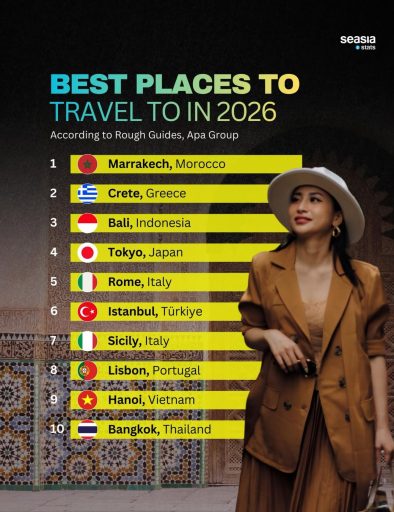
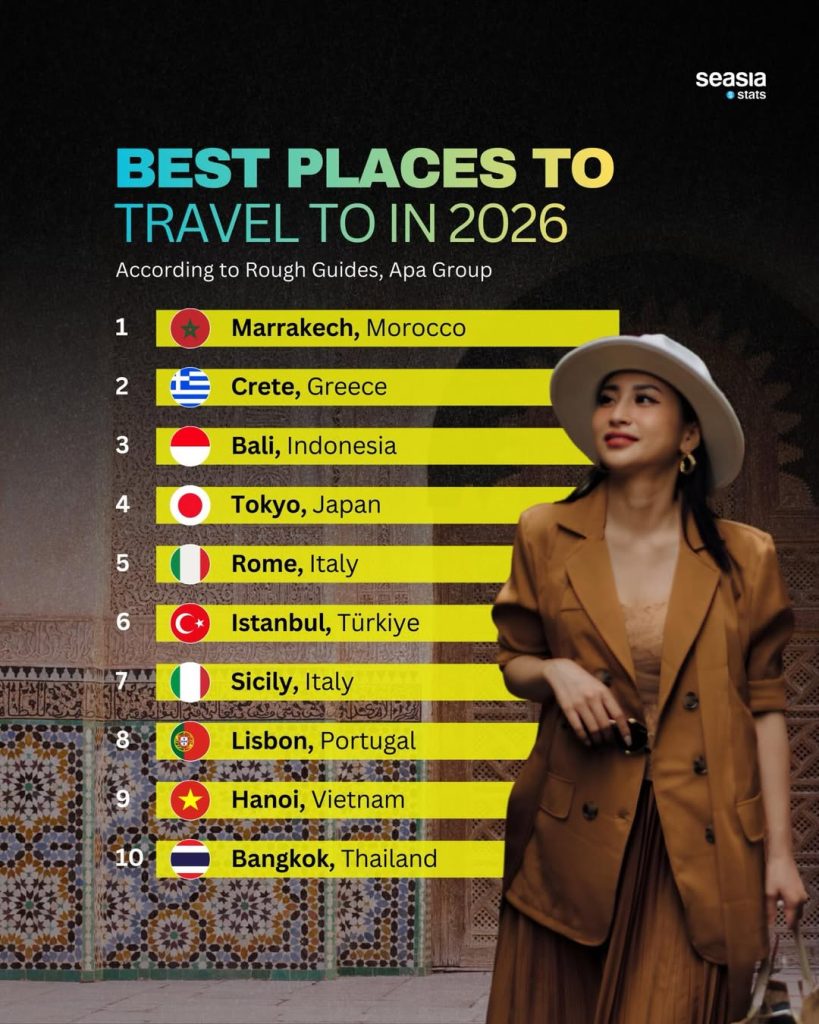
Bali has once again affirmed its status as one of the world’s most desirable destinations, ranking #3 on Rough Guides’ “Best Places to Travel in 2026”, as shared by seasia.stats. This global recognition places Bali alongside internationally renowned destinations such as Marrakech, Crete, Tokyo, and Rome — reinforcing the island’s enduring appeal within the global travel industry.
For decades, Bali has remained a cornerstone of Indonesia’s tourism landscape. Its ability to continuously evolve while preserving cultural authenticity is what sets it apart. As global travelers increasingly seek destinations that offer meaningful experiences, cultural depth, and natural beauty, Bali continues to meet — and exceed — those expectations.
A Destination Rooted in Culture and Nature
Often referred to as the Island of the Gods, Bali is deeply shaped by its spiritual traditions, daily rituals, and artistic heritage. Ancient temples, ceremonial processions, and community-based customs remain a living part of everyday life, offering travelers an immersive cultural experience rather than a purely observational one.
Beyond its cultural richness, Bali’s landscapes are equally compelling. From the iconic rice terraces of Ubud and the volcanic scenery of Mount Batur to dramatic coastlines and white-sand beaches, the island offers remarkable geographical diversity within a compact area. This balance between culture and nature makes Bali suitable for a wide range of travel interests and demographics.
Versatility for Global Travel Markets
One of Bali’s greatest strengths lies in its versatility. The destination caters seamlessly to leisure travelers, honeymooners, wellness seekers, incentive groups, and repeat visitors. World-class resorts, private villas, boutique hotels, and integrated event facilities allow for flexible program design across different market segments.
Wellness tourism continues to grow in Bali, supported by yoga retreats, holistic spas, and nature-based healing experiences. At the same time, luxury travel remains strong, with curated dining, private excursions, and personalized services becoming increasingly prominent. This adaptability ensures Bali’s continued relevance amid evolving global travel trends.
Alignment with 2026 Travel Trends
Rough Guides’ selection criteria emphasize destinations that offer authenticity, sustainability, and cultural value — all of which align strongly with Bali’s ongoing tourism direction. Community-based tourism initiatives, sustainable accommodations, and responsible travel practices are increasingly integrated into Bali’s tourism ecosystem.
With its established infrastructure, international connectivity, and experienced local operators, Bali remains a reliable and strategic destination for forward-looking travel programs. It offers consistency in operations while still allowing room for creativity and experiential design.
Indonesia’s Continued Global Presence
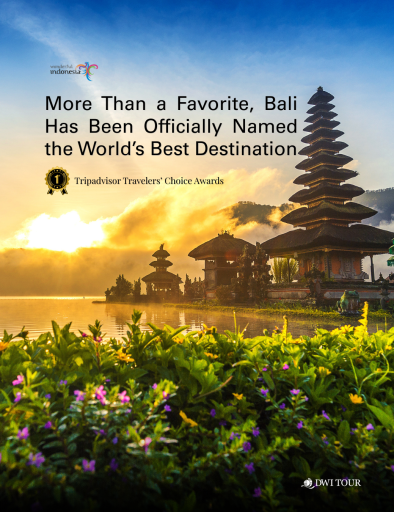
Bali’s inclusion in the Top 3 Best Places to Travel in 2026 further strengthens Indonesia’s global tourism positioning. Alongside recent international recognition for destinations such as Komodo National Park, Bali represents Indonesia’s ability to offer world-class travel experiences rooted in authenticity and natural beauty.
As global demand continues to favor destinations with strong identity and storytelling value, Bali stands as a timeless benchmark — a destination that continues to inspire, adapt, and lead.
Source: @seasia.stats, referencing Rough Guides (APA Group)
For destination insights, itinerary development, or operational support in Indonesia:
📩 info@dwitours.com
📱 https://wa.me/6281575588882